
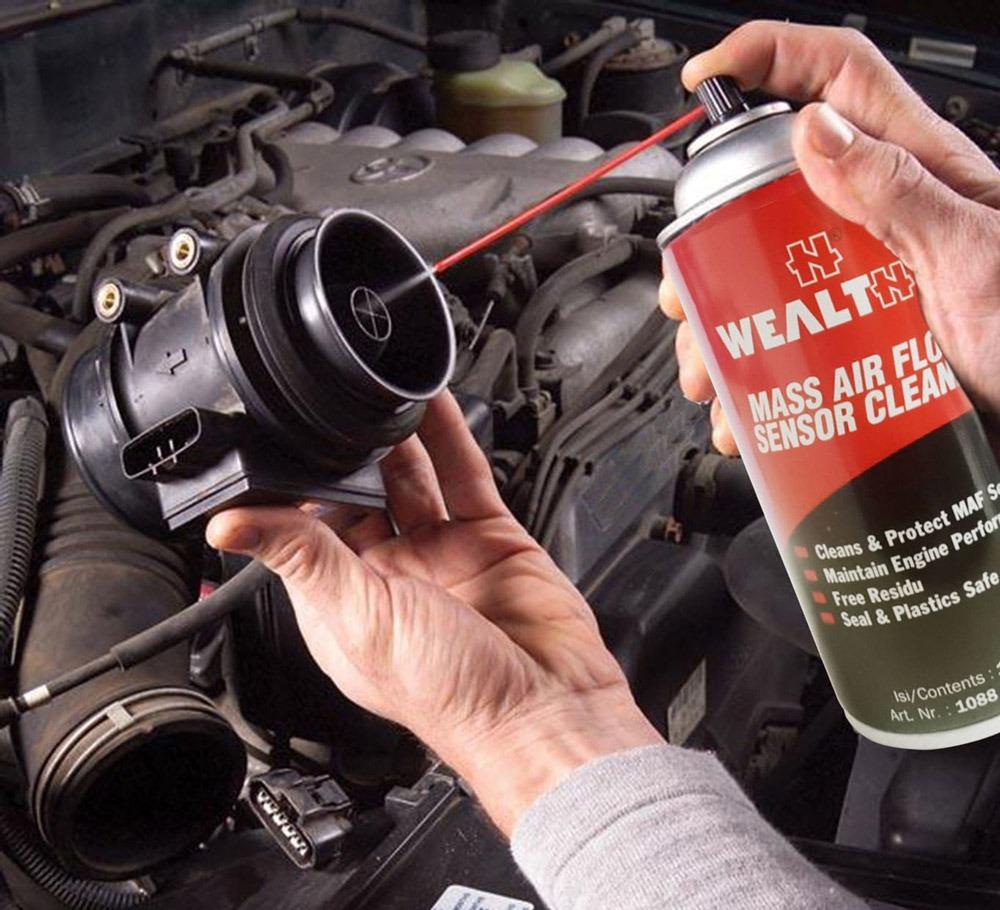
When choosing the best exhaust sensor cleaning spray for your car, some specifications must be considered to ensure you get an effective and safe product. You should choose a spray that contains chemicals capable of effectively removing carbon and other deposits, suitable for gasoline and diesel engines depending on your car type. You should also choose a spray that comes with a nozzle or thin tube that makes it easy to access the internal parts of the exhaust system. It is also preferable to use sprays that contain biodegradable materials to reduce the environmental impact, because the best exhaust sensor cleaning spray should be environmentally friendly.
What is the function of the exhaust sensor?
The exhaust sensor, also known as the oxygen sensor or O2 sensor, is an important device in the automotive exhaust system. Its main function is to measure the oxygen content in the exhaust gases, and it has several other functions:
- Exhaust oxygen sensor measures the oxygen content in the exhaust gases after fuel combustion in the engine.
- This information is provided to the engine's electronic control unit (ECU).
- Fuel efficiency is improved based on exhaust sensor readings; the ECU adjusts the fuel-air ratio in the fuel mixture to ensure optimal combustion.
- It helps improve fuel efficiency and reduce waste.
- Reducing harmful emissions
- It helps ensure complete fuel combustion, which reduces emissions of harmful gases such as carbon monoxide (CO) and hydrocarbons (HC).
- It works in conjunction with a catalytic converter to reduce harmful emissions.
- Improving engine performance by providing accurate data on oxygen levels; the exhaust sensor helps improve engine performance and stability.
- It helps prevent problems such as vibrations or jerking while driving.
- The driver is alerted to faults if there is a malfunction in the exhaust system or if the oxygen ratio is unbalanced. The exhaust sensor sends signals to the ECU, which causes a warning light to illuminate on the instrument panel (usually "Check Engine").
- It provides a more accurate reading of the oxygen content in exhaust gases, which helps to improve the combustion process.
When should the exhaust sensor be replaced?
The exhaust sensor has a certain lifespan (usually between 60,000 and 100,000 km) and should be replaced when it shows signs of damage such as increased fuel consumption, or the Check Engine light comes on. You will notice improved engine performance and fuel efficiency after replacing it with a new sensor.
Specifications of the best exhaust sensor cleaning spray
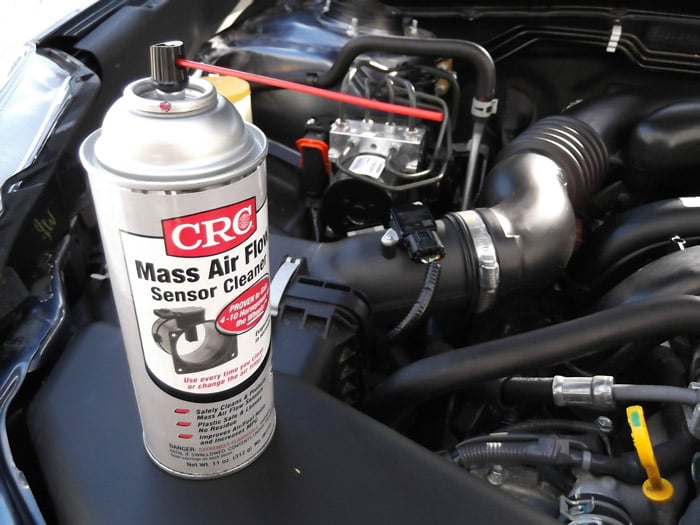
The best exhaust sensor cleaning spray should have specifications that qualify it to be effective and useful, such as Liqui Moly air sensor cleaner. These specifications include :
- The exhaust system cleans the entire system effectively.
- Suitable for use in all types of cars
- It helps reduce exhaust emissions and improve engine performance.
- Easy to use with a precise guiding nozzle
- High cleaning efficiency is required, and it must be ensured that the spray is capable of effectively removing deposits.
- Suitable for both petrol and diesel engines, and selecting an injector that matches your car's fuel type.
- For ease of use, choose a sprayer with a precision-guided nozzle to reach the internal parts of the exhaust.
- Improving performance and reducing emissions: The spray should help improve engine performance and reduce harmful emissions.
- Good reviews: Look for products that have received good reviews from users in Saudi Arabia.
- You can find these products at auto parts stores or online through trusted websites and stores such as Car Qozum Auto Parts.
One of the most important benefits of cleaning the exhaust sensor is that you can read the exhaust sensor correctly, which helps in having accurate knowledge about the safety of the car.
How to check the exhaust sensor
Checking the exhaust sensor (oxygen sensor) is a very important part of car maintenance to ensure the engine works efficiently and powerfully, and thus ensures the car's safety. The steps for checking the exhaust sensor are as follows:
Required tools:
- A voltmeter (multimeter) is used to measure electrical voltage and signals.
- A wrench to remove the sensor if necessary
- Exhaust sensor cleaner if cleaning the sensor is necessary before inspection.
Steps:
- Locating the exhaust sensor: The exhaust sensor is usually located in the exhaust system before or after the catalytic converter, and there can be more than one sensor in the car (front sensor and rear sensor).
- Visual inspection: Visually inspect the sensor to check for any damage or corrosion.
Make sure the wires are properly connected and undamaged.
- Start the engine and allow it to reach normal operating temperature.
- Voltage measurement (for narrowband exhaust sensor)
- Connect the voltmeter to the sensor's wires.
- The voltage should change between 0.1 volts and 0.9 volts periodically (frequency about 1 time per second).
- Resistance measurement (for a wideband exhaust sensor)
- Disconnect the sensor and measure the resistance using a voltmeter.
- Compare the reading to the value specified in the vehicle's maintenance manual.
- To check the sensor's response, slowly increase the engine speed and observe the sensor's reaction.
- The signal should change rapidly as the air-fuel ratio changes.
- Performance testing using a code reader: Use an OBD-II code reader to check for any fault codes related to the exhaust sensor.
- Common codes may include P0130, P0131, P0132, P0133, P0134
What to do if the sensor is faulty
What procedures should be followed if the exhaust sensor malfunctions?
In this case, the following must be done:
- Cleaning the sensor: If there are deposits on the sensor, it can be cleaned using an exhaust sensor cleaner.
- Replace the sensor if the readings are abnormal or if the sensor is faulty; it should be replaced with a new sensor.
- Make sure to follow safety guidelines during inspection and maintenance.
- You should check your vehicle's service manual for accurate information about the sensor's location and specific check values.
- If you are unsure about performing the inspection yourself, it is best to consult a qualified mechanic.
By following these steps, you can check the exhaust sensor and make sure that it is working properly, which helps improve fuel efficiency and reduce harmful emissions.
How to clean the exhaust sensor without disassembling it
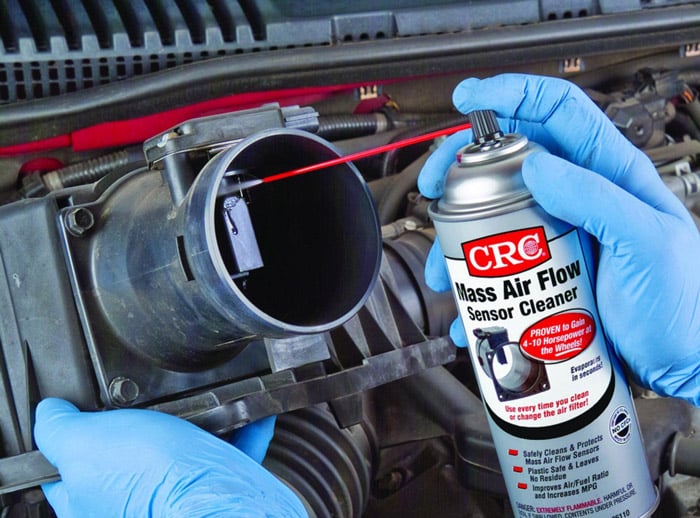
Cleaning the exhaust sensor without disassembling it is possible to maintain car performance without needing to remove the sensor completely. The required tools are:
Choosing the best cleaning spray Exhaust sensor
(Such as CRC or WD-40) and is used to remove dirt and deposits from the sensor and select soft cleaning brush To clean the external parts gently, you should use protective gloves and safety glasses to protect yourself during the cleaning. You can start by locating the exhaust sensor. Look for the location of the exhaust sensor in the exhaust system. It may be located before or after the catalytic converter. Then, you must turn off the engine and make sure that the engine is cool and that the car is in a safe place. When you reach the sensor, you need to raise the car slightly using a jack to access the sensor easily. Make sure that the car is securely fastened before you start cleaning the sensor. Put on the protective gloves and glasses, then use an exhaust sensor cleaner and spray an appropriate amount on the sensor, focusing on the parts that you can reach without removing the sensor. If there is any visible deposit on the outside of the sensor, you can use a soft brush to clean it gently. Wait a few minutes until the cleaner is completely dry and make sure that the sensor is dry before starting the engine.
After making sure the sensor is dry, start the engine and let it run for a short time to ensure that the sensor is working properly. It is best to use the best exhaust sensor cleaning spray to ensure that the sensor is not damaged.
One of the most important tips to follow is to regularly check and clean the sensor to maintain the car's performance. If you do not notice an improvement in engine performance after cleaning, or if there are ongoing problems, it may be necessary to have the sensor checked by a qualified mechanic and replace it if necessary. By following these steps, you can clean the exhaust sensor without disassembling it, which helps improve engine performance and reduce harmful emissions.