

The method of repairing the car's ignition coil is of great importance because the coil plays a vital role in converting the low voltage from the battery to a very high voltage to generate the spark needed to operate the spark plugs, which in turn ignite the fuel-air mixture inside the engine cylinders. Without the coil, the engine will not be able to produce the spark needed to start the combustion process, which leads to the engine stopping working or being unable to start at all. Also, a proper coil helps in burning fuel efficiently inside the cylinders, which leads to improved fuel consumption efficiency. Also, among the functions of the car's coil is ensuring a constant flow of electricity to the spark plugs and maintaining stable engine performance and avoiding sudden interruptions or stops while driving. It also prevents harmful emissions due to the complete combustion of fuel resulting from good coil performance.
What are the symptoms of a damaged car coil?
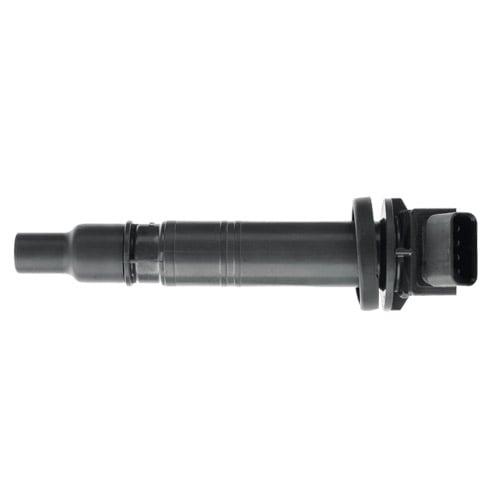
Symptoms of a faulty car ignition coil are signs that indicate the coil is malfunctioning or not working efficiently, guiding the driver to learn how to repair the coil and take care of it.
Whether by attempting to repair the car coil using a specific method or by replacing the coil with a new one of a type suitable for the car, when the coil is damaged, several symptoms appear that affect the engine's performance and the car's efficiency. Among the most important of these symptoms are:
- Difficulty starting the engine when attempting to start it because the damaged coil does not provide the necessary spark for the spark plugs to ignite the fuel-air mixture.
- Engine vibrations at low speeds are due to improper spark distribution to the engine cylinders.
- The engine is not responding as quickly as expected due to insufficient spark needed to burn the fuel efficiently.
- A faulty ignition coil leads to malfunctioning ignition, causing uneven fuel combustion in the cylinders (known as misfire), resulting in irregular knocking noises from the engine or noticeable vibrations while driving.
- Due to inefficient fuel combustion, fuel consumption occurs significantly exceeding normal levels.
- The check engine light on the dashboard indicates that the car's computer system has detected an ignition problem and illuminates the warning light as a precaution.
- Improper fuel combustion results in black smoke or foul odors from the exhaust, indicating a problem with the ignition system, including the ignition coil.
- The vehicle loses its ability to climb hills or operate efficiently when loaded with heavy weight.
All of the above are signs and symptoms of a damaged car coil. If you encounter any of these symptoms, it is recommended to check the coil as soon as possible to avoid the problem worsening. The steps for repairing the car coil should be applied, or it should be replaced with a new one immediately if it is confirmed to be damaged.
Qozom Car Auto Parts Store presents to you Best Toyota Avanza 2016 coil
How to check a car's ignition coil
Checking a car's ignition coil is a simple and easy process that doesn't require a professional. You should know the steps because you will likely need them to confirm any problems if signs appear indicating a fault in the coil. The steps are:
- Make sure the engine is completely off and the key is not in the ignition.
- Open the hood and locate the ignition coil. In modern cars, the coil is usually directly connected to each spark plug.
- Check for any damage or corrosion in the wires connected to the coil. If you find any broken or damaged wires, that could be the cause of the problem.
- Disconnect the coil wire from the spark plug and place a new or used spark plug at the end of the disconnected wire.
- Hold the spark plug near a metal surface in the engine by about half an inch.
- Have someone else start the engine for a short time while you monitor the spark plug.
- If you notice a strong and stable spark, this means that the coil is working. If there is no spark or it is weak, the coil may be weak or damaged.
How to check coil resistance
You can use a multimeter to measure the coil's resistance. Check the car's manual to find the appropriate resistance value. If the reading is outside the specified range, it may mean that the coil is damaged. If there is no spark or the results are unsatisfactory, it is best to consult a mechanic to examine the coil thoroughly and replace it if necessary.
How to repair a car's ignition coil
Repairing a car coil in simple, organized steps is possible in some cases, but often replacing the entire coil is the best solution due to extensive damage. These are the steps you can follow to repair or replace a car coil.
First: Tools used
- Electrical testing device (multimeter)
- screwdriver
- protective gloves
- New coil (if necessary)
Second: The ordered steps
- Before starting any repairs, inspect the coil. Use a multimeter to measure the resistance inside the coil and compare the results with the standard values specified in the vehicle's manual. If the values are outside the acceptable range, this means the coil is faulty.
- When turning off the car, make sure the engine is switched off and wait for the car to cool down to avoid any electrical injuries.
- Locating the coil: Open the hood and locate the coil. In modern cars, the coil is individually integrated with each spark plug, while in older cars, there is a single coil serving all cylinders.
- To remove the coil, disconnect the battery to avoid any electrical current, then carefully disconnect the electrical wires connected to the coil using a screwdriver, and finally remove the coil from its location using screwdrivers.
- Inspect the wires and connectors, ensuring that the wires connected to the coil are intact and not damaged or corroded. If there is any corrosion or breaks in the wires, they will need to be replaced or repaired.
- Cleaning the coil: If the coil is not damaged, it can be cleaned using a special cleaner to remove dirt and deposits that may affect its operation. This may help solve the problem if it is caused by the coil being dirty.
- Replace the coil: If you are certain that the coil is damaged and cannot be repaired, it should be replaced with a new one.
- Secure the new coil in place using the same method you used to remove the old one, and make sure all screws and connections are tight.
- Reconnect the wires correctly and make sure they are securely fastened and undamaged.
- After putting everything back in place, connect the battery and start the engine to ensure the coil is working properly and the car is running without problems.
You should replace a damaged coil quickly before it causes problems in your car. It is best to choose guaranteed types that are characterized by high quality, durability and efficiency, such as the car coil from Qazum Car Store, which offers you the best types of international brands.
The difference between an original and a commercial coil
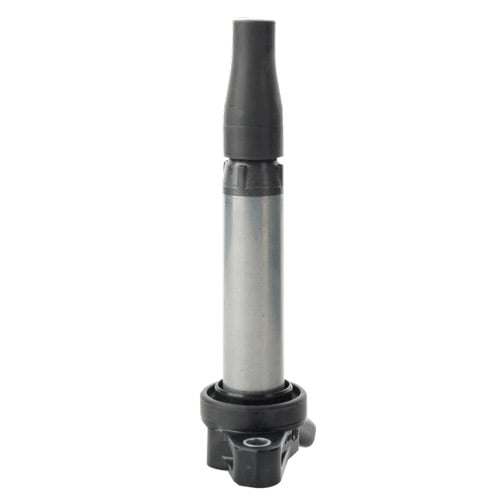
To understand the difference between an original and a commercial coil, you should know that an original coil is manufactured according to strict quality standards by the car manufacturer or authorized suppliers. This ensures the car's quality standards and the coil's operating efficiency. Commercial coils, on the other hand, often have lower quality standards, which is clearly reflected in their performance and lifespan. Original coils have a longer lifespan and are designed to withstand various operating conditions, while commercial coils are more prone to damage due to the quality of the materials used, thus requiring frequent replacement. You should also know that original coils are more expensive due to their high quality and guaranteed performance, while commercial coils are less expensive, but the long-term cost may be higher due to the need for frequent replacement.
One of the most important differences between the original and aftermarket coils that should be taken into consideration is that the original coil comes with a manufacturer's warranty, which provides security in case of any problem. Aftermarket coils, on the other hand, often have a limited warranty or no warranty. The original coil is specifically designed to be fully compatible with the car and works efficiently with the electronic systems, while aftermarket coils may not be fully compatible with the systems in the car, which may lead to performance problems or the appearance of malfunctions. We conclude from the above that the original coil guarantees better performance and longer stability, while aftermarket coils may be a temporary option or in cases of limited cost, but they may require continuous maintenance and cost you more times to replace them.